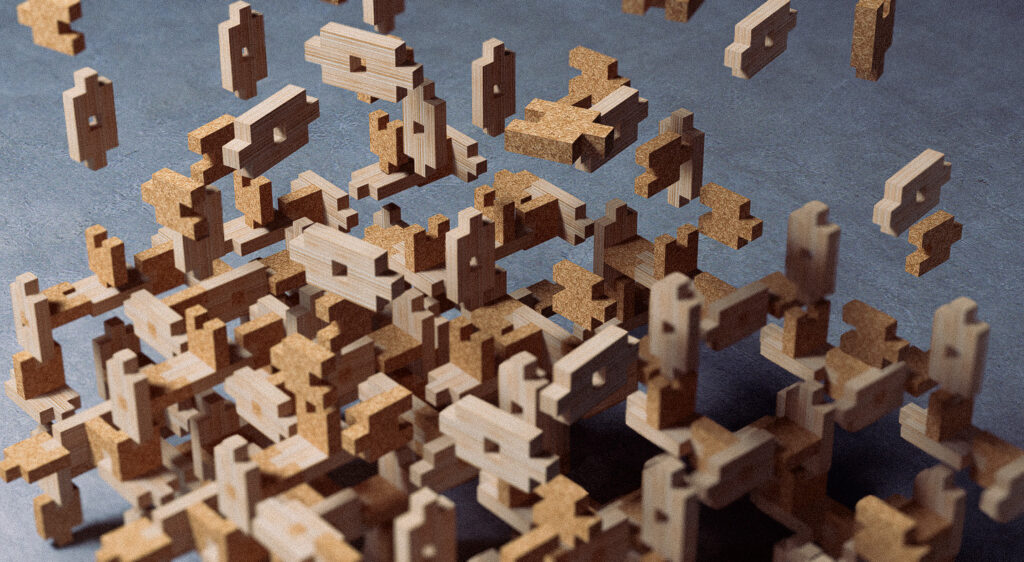
Genesis attempts to investigate the potential of discrete modular systems as a foundation for generative architectural design.

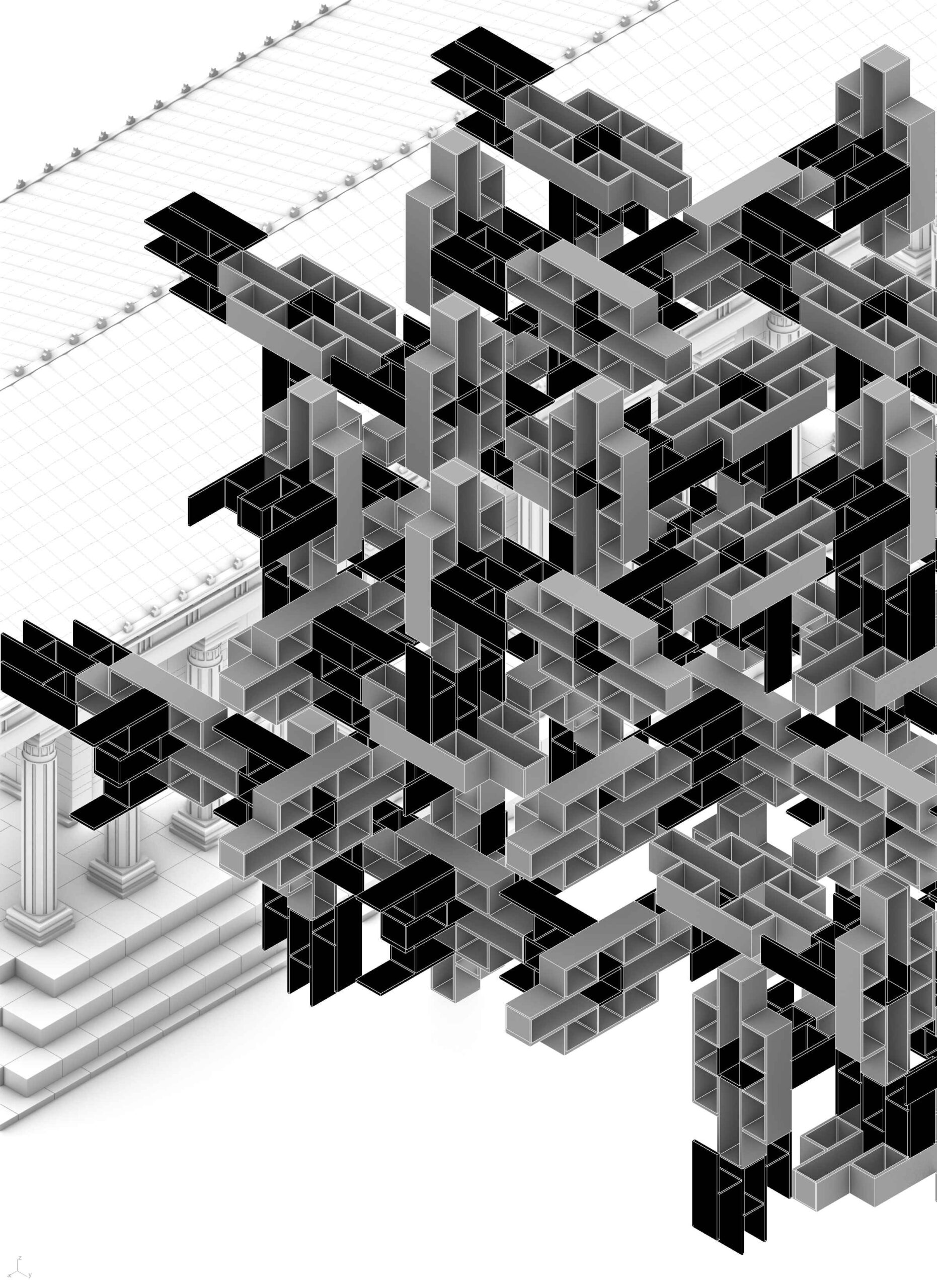
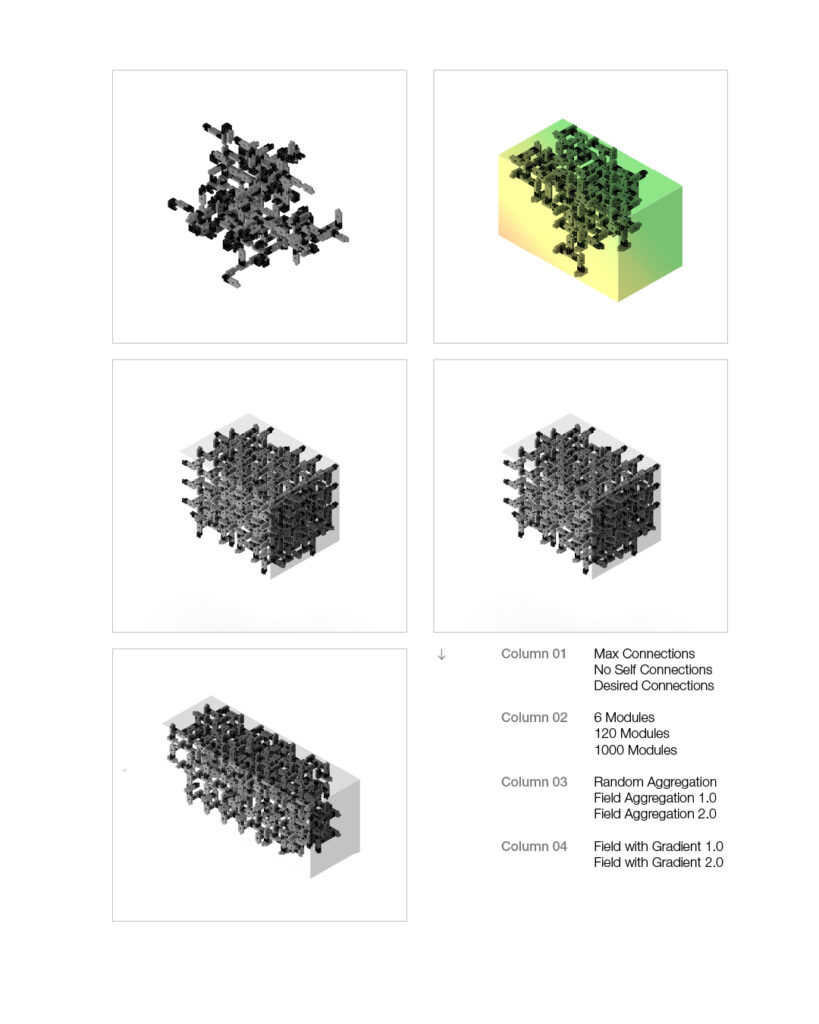
The project builds a computational framework that explores how individual units, when guided by field conditions and connection rules, can self-organize into architectural assemblies that are reproducible under similar conditions. Through iterative digital modeling and physical prototyping, the research examines aggregation behavior, field gradients, and spatial adaptability.
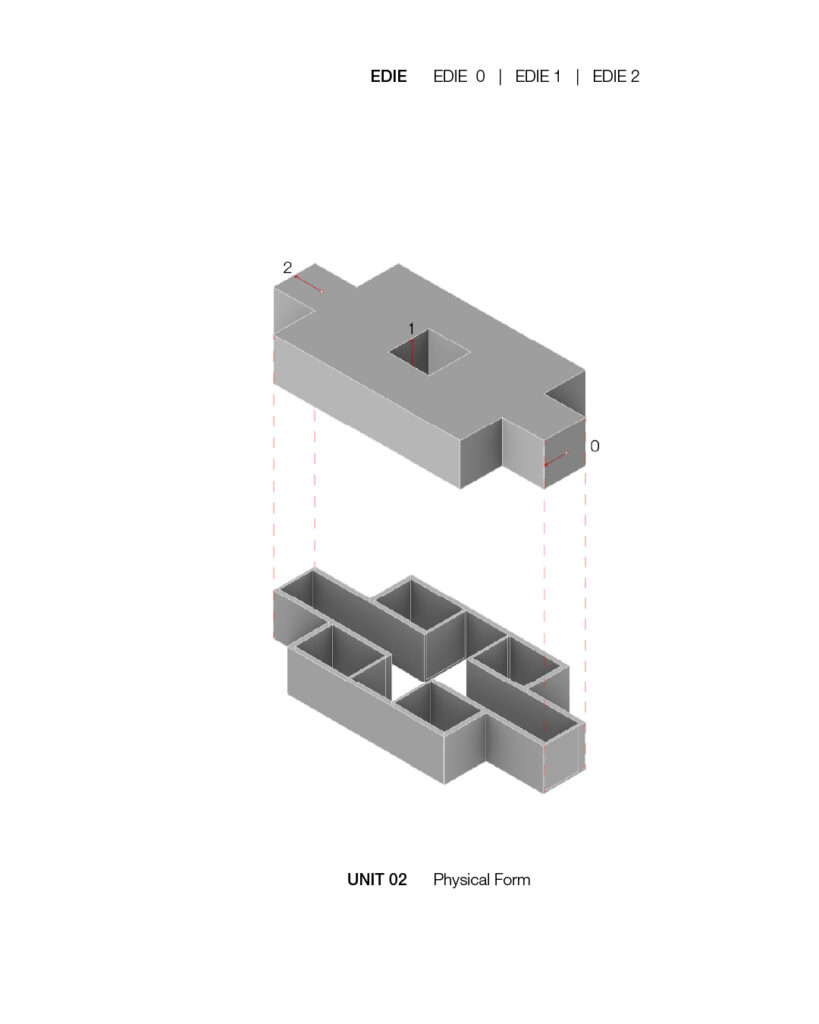
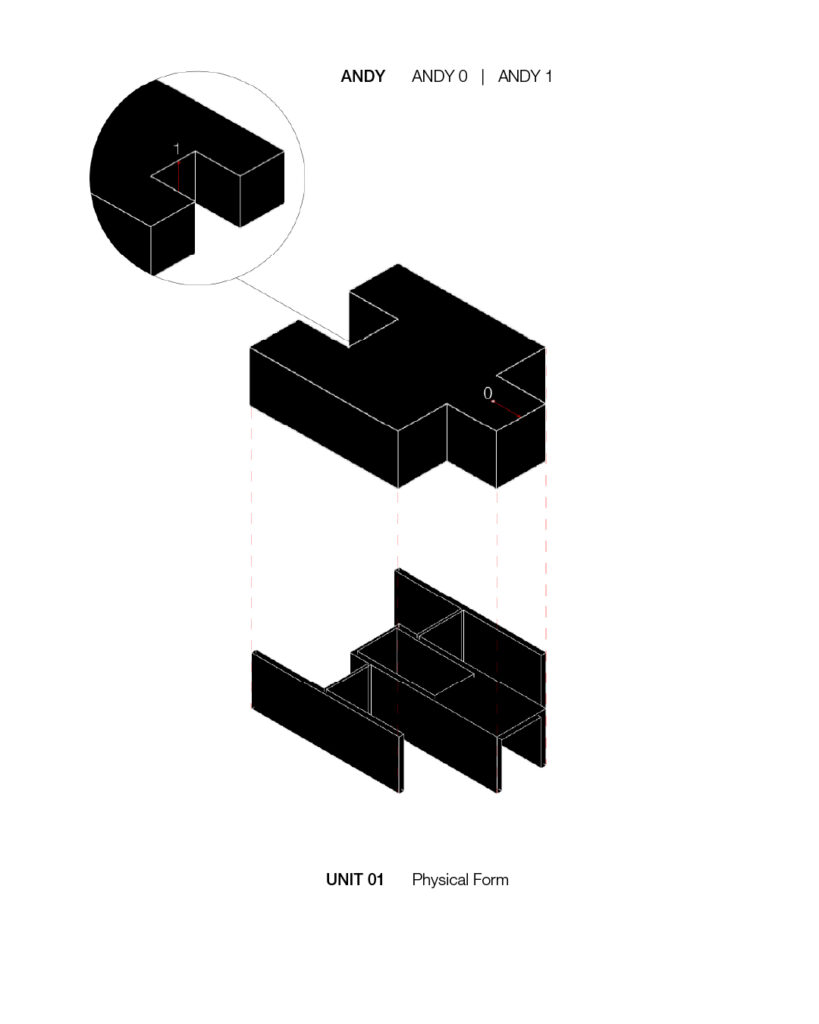
Andy represents the connector module that allows for spatial fluidity and variability. It has one level of symmetry that organizes the flow of its hypothetical residents. Andy functions as the core of Genesis.
Edie represents the dwelling module that serves as the primary living space for its hypothetical residents. It has two levels of symmetry that allow for multiple variations of interior layouts and orientations within itself.

The physical model tested the feasibility of translating Genesis into real-world construction. The challenges of gravity and the absence of a clear starting point emerged as two major limitations, revealing the complexity of aggregating discrete modules in physical form.


This process emphasized the importance of integrating structural and progressional logic into this kind of speculative design. Acrylic boards and laser-cut components were used instead of 3D printing to achieve greater precision.